Focus, mental energy and time management are crucial for knowledge workers to achieve their highest performance. Productivity is often a determinant of output quality and career advancement for developers as well as designers as well as writers as well as analysts. The use of a productivity monitor enables individuals to gain insight into the way they spend their workday, enabling them to enhance efficiency without requiring additional work hours.
Knowing Precisely what a Productivity Monitor Really Does
A productivity monitor is a software application that monitors work patterns, time spent, and electronic activity to offer detailed information on daily performance. Instead of being a surveillance system, it becomes a self-awareness tool which identifies habits that either help or hinder productivity.
Research indicates that knowledge employees lose a substantial part of the day to interruptions, context switching, along with impromptu activities. The frequency of distractions is often underestimated by many people. A productivity monitor provides insight into the movement of time, changes in focus and the most energy-intensive tasks.
A productivity monitor can provide the following insights:
- Time spent on concentrated work compared to interruptions.
- Patterns of peak productivity throughout the day
- Repeated interruptions or job switching
- Workload balance across various projects
Workers may make smarter adjustments based on this information rather than guessing what needs improvement.
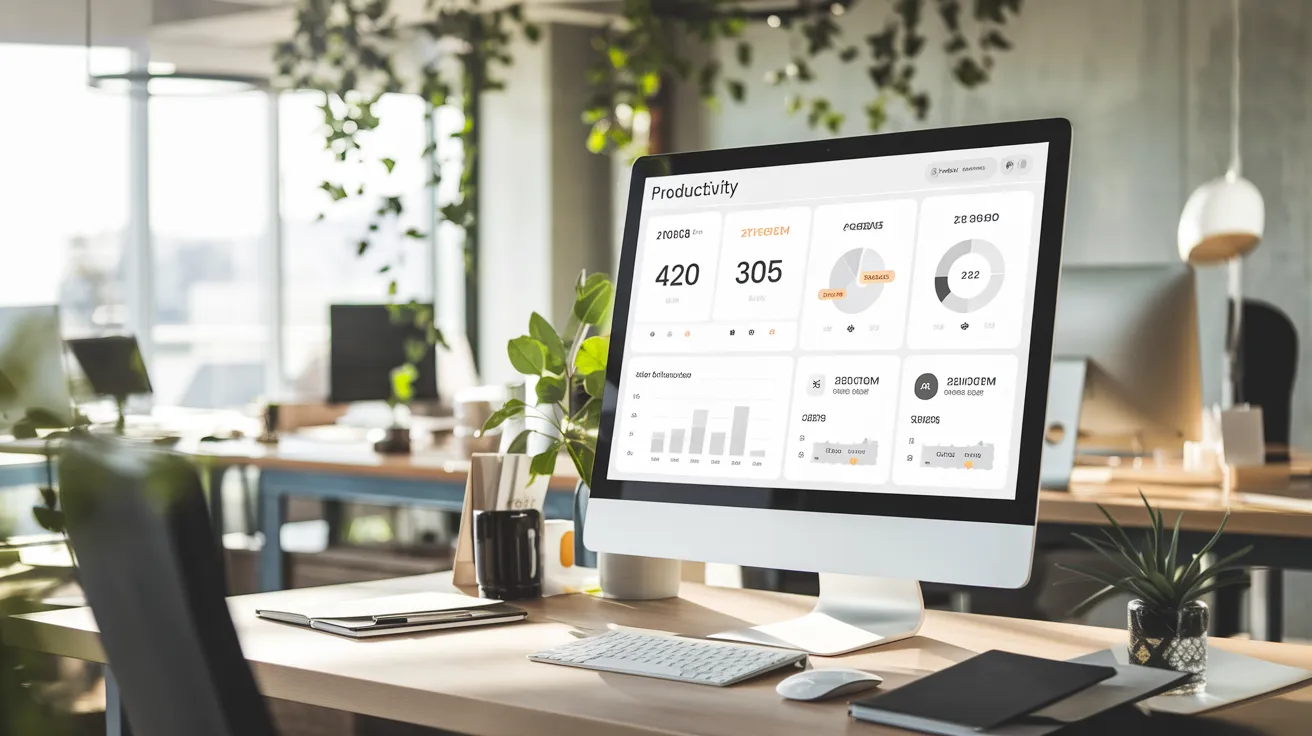
How a Productivity Monitor Enhances Daily Work Performance Improves Daily Work Performance
Improvement becomes easier once patterns are apparent. Knowledge workers can make small, precise adjustments that produce tangible results with a productivity monitor. Rather than trying to change the whole workflow, workers can tackle certain problem areas step-by-step.
As an example, in case data shows regular interruptions during specific hours, meetings could be rescheduled or notifications restricted. Structured breaks could be included to bring energy after prolonged work sessions if focus drops off during long sessions. Concentration as well as task completion rates can be significantly enhanced by using structured work intervals and minimizing distractions, according to research.
A productivity monitor aids in the pursuit of improvement by assisting workers:
- Determine tasks that call for deep concentration.
- Reduce time lost to low value activities
- Produce better work rhythms
- Balance workload to stop burnout
Over time, these modifications result in improved output quality and consistent performance with no extra strain.
Long-Term Benefits for Career Growth and Well-Being
A productivity monitor provides long-term benefits for personal well-being and professional advancement, going beyond daily efficiency. Knowledge work is psychologically demanding and prolonged overload can result in exhaustion or burnout. The monitoring of productivity enables workers to identify warning signs prior to performance deteriorates.
Better goal setting as well as planning is also aided by long-term data. Workers are able to establish realistic deadlines and communicate expectations better when they know how long tasks take. Transparency often enhances team collaboration and also builds trust.
Additional long-term benefits include:
- Better work-life balance through better boundaries and boundaries.
- Greater accountability as well as self-management
- Improved confidence in individual productivity practices.
Self-managed productivity becomes more crucial as hybrid and remote work continue to increase. Knowledge workers can use a productivity monitor to manage their time, safeguard their focus and sustainably advance in their careers by taking control of their time.